

10 tips for hiring the right web development company
What to check before you hire a web design or development company: portfolio, process, ownership, SEO, support and the questions to ask.
A website is a long-term asset, and the company that builds it shapes how easy it is to grow, update and market for years. Prices vary widely, and so does what you get for them. These ten checks help you compare companies on what matters, not just on the quote.
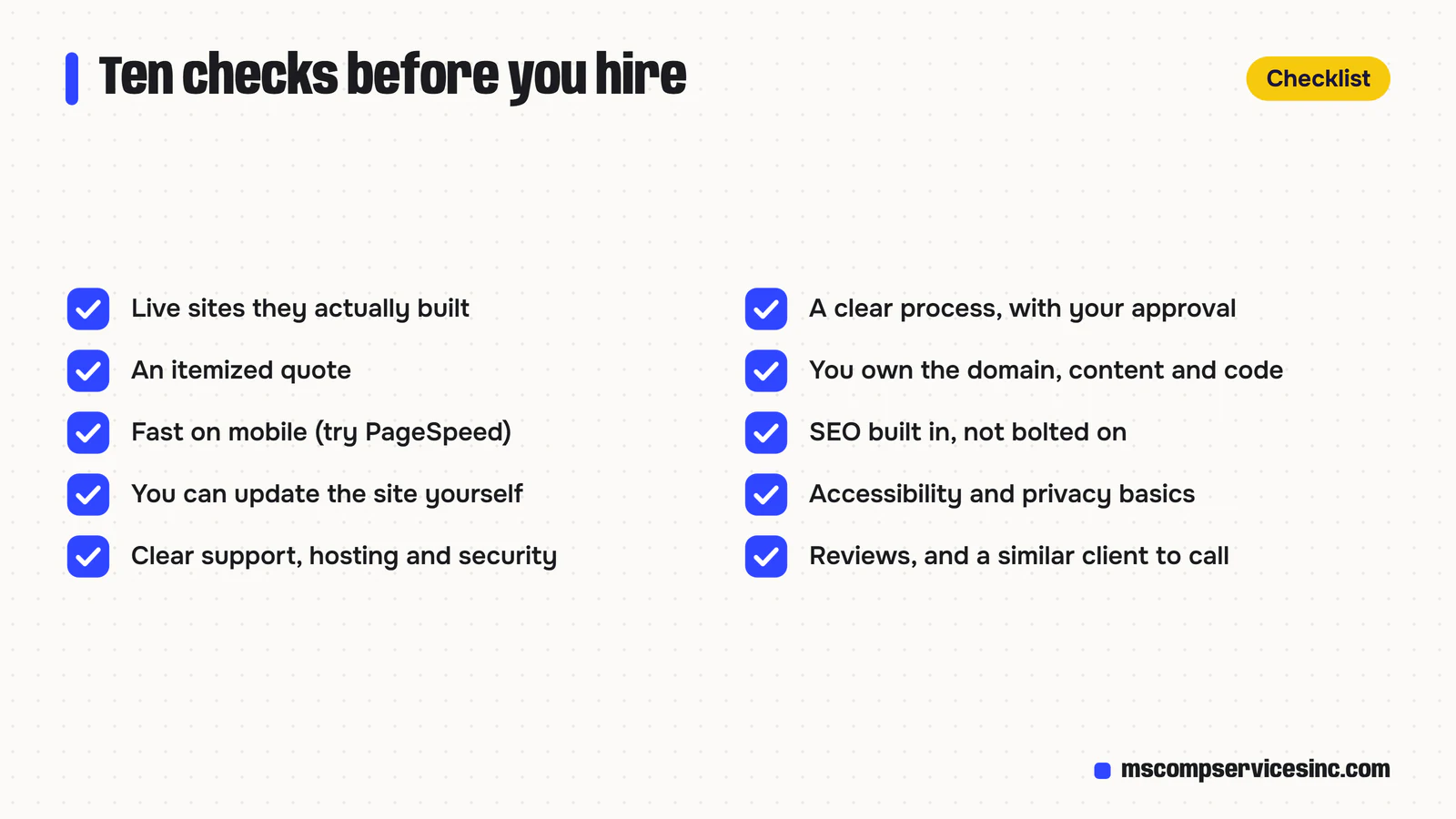
1. Look at work they've actually built
Ask for live sites, not just screenshots. Open them on your phone. Are they fast? Easy to use? Do they look different from each other, or like the same template with new colours? Ask what the company did on each project, since some portfolios include work where they only made small changes.
2. Ask about their process
A good company asks a lot of questions before it quotes: who your customers are, what they need to find, what success looks like. Expect a clear sequence: discovery, structure (sitemap and wireframes), design, build, content, testing and launch, with your approval at each stage. Vague answers here usually mean surprises later.
3. Get an itemized quote
An itemized quote shows what's included: number of pages, design rounds, content writing, SEO setup, integrations, training and support. It makes quotes comparable and protects both sides. Be wary of quotes that are much cheaper than the rest without explaining why. For typical price ranges by type of site, see how much a website costs in Canada.
4. Confirm you'll own everything
You should own your domain name, your content, your design and the site's code or account. The domain should be registered in your name. Ask what happens if you part ways: can you take the site to another company or host without starting over?
5. Check mobile performance and Core Web Vitals
Most visitors will see your site on a phone. Run a few of their recent sites through PageSpeed Insights on mobile. Consistently low scores suggest heavy templates or plugins that will slow your site too.
6. Make sure SEO is built in, not bolted on
Search visibility starts with how the site is built: clean URLs, proper headings, fast pages, structured data, a sitemap and, if you're replacing a site, redirects for every old page. Ask how they'll protect your current rankings during the switch. Our checklist on redesigning without losing SEO shows what to expect.
7. Ask how you'll update the site
Can you change text, photos and prices yourself without calling a developer? Ask for a demo of the editor. Equally, ask what it costs when you'd rather they make changes for you.
8. Check accessibility and privacy basics
A good site works with keyboards and screen readers, has readable contrast and describes images. Ontario businesses with 50 or more employees have legal accessibility requirements, and accessibility helps every visitor anyway. The site also needs a privacy policy that matches what it actually collects, which ad platforms like Google and Meta check.
9. Understand support, hosting and security
Who hosts the site, who applies updates, and who fixes it if it breaks or is hacked? Ask about backups, security monitoring and response times. Our website maintenance guide lists what that work should cover. A cheap build on unmaintained hosting can cost far more later; we've cleaned up hacked sites where nobody had applied an update in years.
10. Talk to their clients and read reviews
Read their Google reviews, and ask to speak with a client whose project was similar to yours. Ask whether the project stayed on budget and schedule, and how the company handled problems.
Questions to ask on the first call
- What will you need from us, and when?
- Who will we deal with day to day?
- How many rounds of design changes are included?
- Who writes the content, and is SEO part of it?
- What happens after launch: training, support and maintenance?
- Can we see the site on a test address before it goes live?
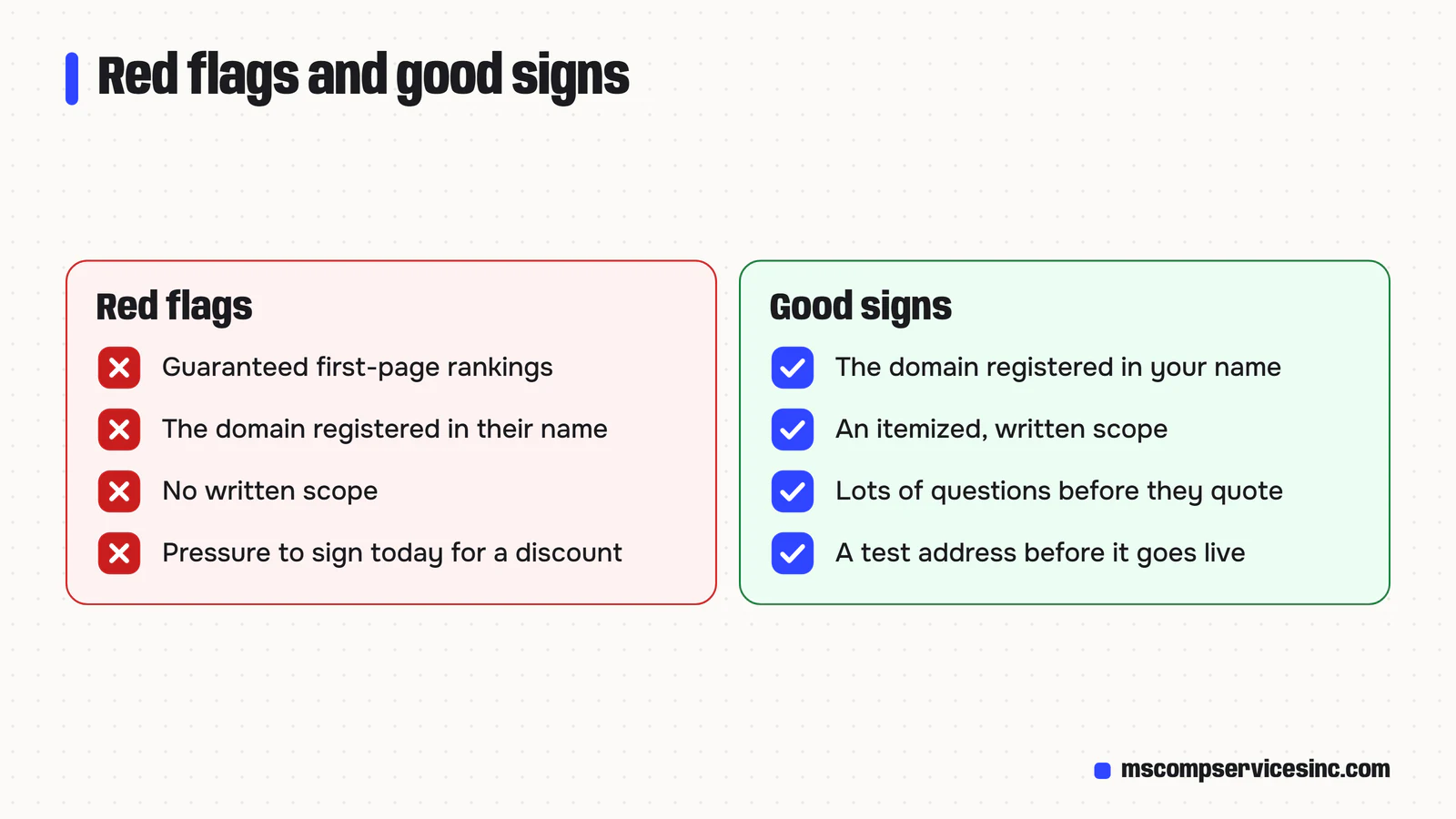
Red flags
- Guaranteed first-page rankings. Nobody can promise that honestly.
- The domain registered in the company's name, not yours.
- No written scope, or a scope that says "website" and little else.
- Pressure to sign today for a discount.
We'd be glad to answer all of these for your project. See how we work on our web design and development page, or ask for a free quote. Hiring someone for your computers, email and network instead? Read how to choose an IT company in Regina.
Quick answers
How much does a small business website cost in Canada?
It depends on the number of pages, features such as booking or online sales, and who writes the content and takes the photos. Ongoing hosting, maintenance and marketing add to the total. Compare itemized quotes for the same scope rather than headline prices, and check what's included after launch, such as updates and support.
How long does it take to build a website?
A small business site often takes a few weeks to a couple of months. The build itself is rarely the slowest part: timing depends mostly on how quickly content, photos and feedback come together. Larger sites, online stores and custom features take longer, and a clear plan agreed at the start keeps projects on schedule.
Should I choose a local web design company?
Local helps with market knowledge and in-person meetings, and a local company understands your customers and competitors. But process, quality and support after launch matter more than distance. Many projects run well remotely by phone, email and video call, so compare portfolios, reviews and how clearly each company explains its approach.
Want help with this?
Tell us about your business and we'll send a free quote, or call 1-800-944-3688.