

AI in web development: what it changes, and what it doesn't
How AI tools are changing website design and development in 2026, where they help, and why your site still needs human judgement.
When we first wrote about AI in web development in 2021, it was mostly a promise. Today AI tools are part of everyday work for designers and developers, and website builders advertise sites "made by AI in minutes". So what has really changed for a business that needs a website, and what hasn't?
Where does AI genuinely help?
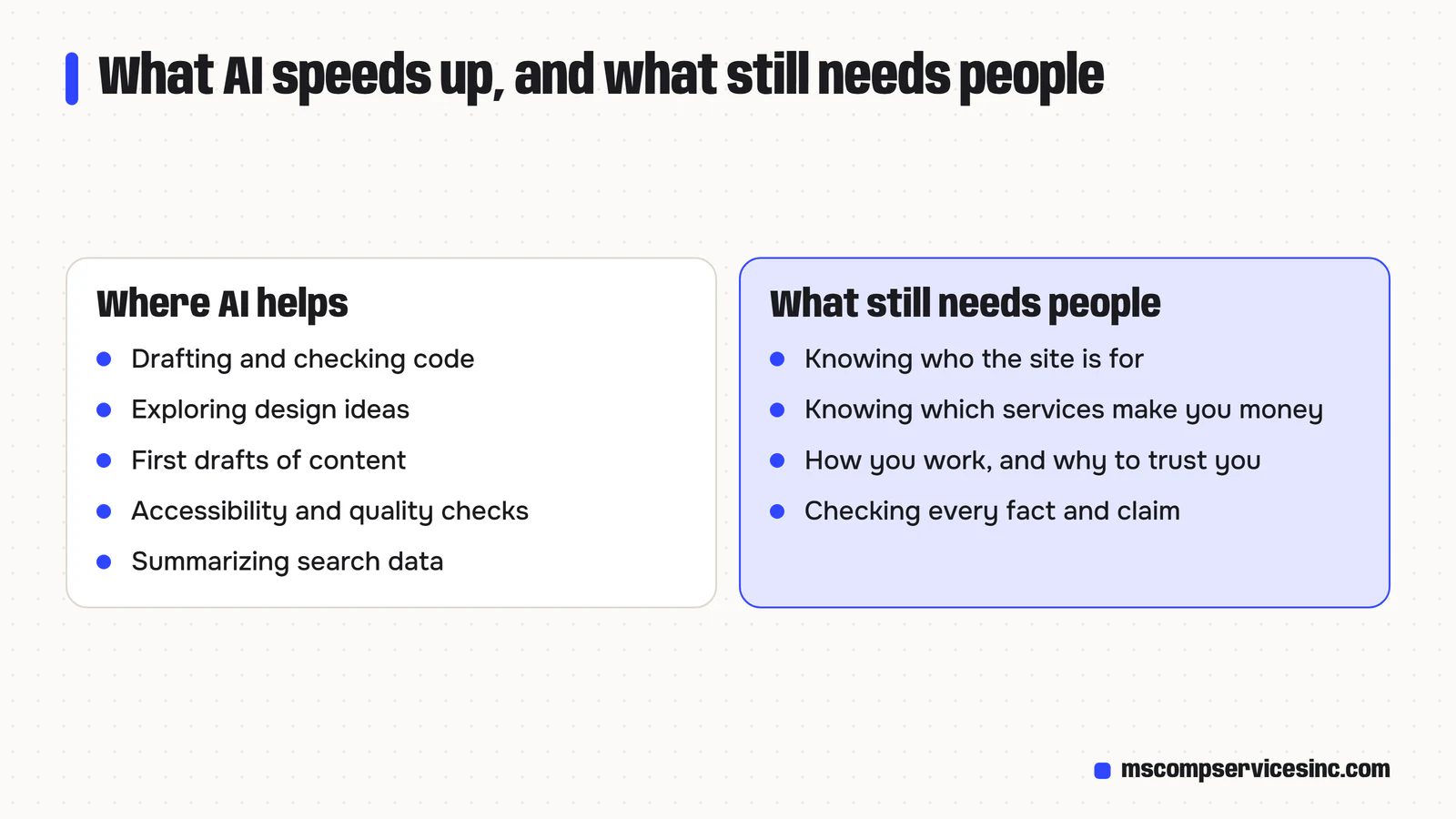
- Writing and checking code: AI coding assistants draft components, spot bugs, write tests and explain unfamiliar code. Experienced developers move faster on routine work.
- Exploring design ideas: generating layout variations, colour palettes and imagery concepts early on helps clients react to options rather than a blank page.
- First drafts of content: outlines, page structures and rough copy that a human then rewrites with real facts and the business's voice.
- Accessibility and quality checks: automated tools flag missing image descriptions, low contrast and broken links faster than manual review.
- Search and analytics: summarizing Search Console data, grouping keywords and spotting pages that lost traffic.
Used this way, AI shortens the dull parts of a project and leaves more time for the parts that need judgement.
What hasn't changed?
A website still has to answer the same questions it always did: who is this for, what do they need to find, and why should they trust this business over the one next door? AI can't interview your customers, know which services make you money, or tell the story of how you work. Those answers come from you, and turning them into a clear site is still human work.
Search engines haven't changed their core preference either. Google's guidance is that it rewards helpful, reliable content however it's produced, and it treats mass-produced pages made mainly to rank as spam. Pages of generic AI text that could describe any business tend to sink.
The risks of an "AI-built" website
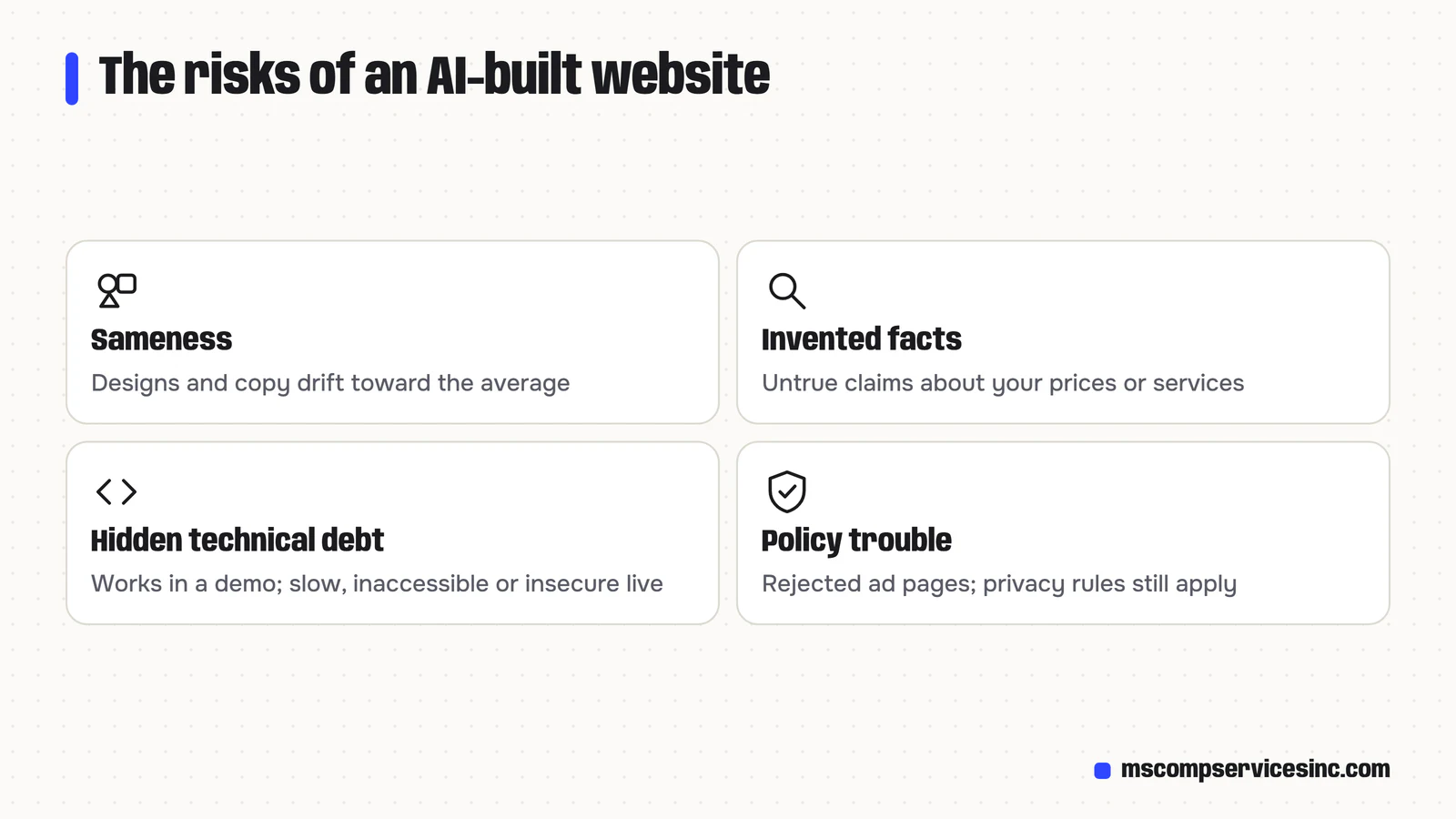
- Sameness: generated designs and copy drift toward the average, so your site looks and sounds like everyone else's.
- Invented facts: AI writing can state things that aren't true about your business, prices or services, which creates legal and trust problems.
- Hidden technical debt: generated code may work in a demo but be slow, inaccessible or insecure in production.
- Policy trouble: ad platforms reject landing pages with unsupported claims, and privacy rules still apply to every form.
How AI is changing search itself
The bigger shift for businesses may be on the other side: customers increasingly get answers from AI tools like ChatGPT, Gemini and Google AI Overviews. Your website now needs to be easy for those tools to understand and quote, with clear answers, structured data and consistent business details. We explain how in What are AEO and GEO?
How we use AI at MS Comp
We use AI tools to speed up research, code review, testing and first drafts. Every design decision, line of copy and claim on a client's site is reviewed by a person who knows the business, and we never publish facts we can't check. The result is faster delivery without the generic look or the invented details.
Should you build your own site with an AI website builder?
For a simple placeholder or a short-term event page, it can be fine. For a business that relies on its website for enquiries, rankings and ad campaigns, the savings rarely survive contact with real needs: custom services, integrations, SEO, speed and ownership of your content. Whatever you choose, make sure you own your domain and can export your content.
If you're weighing up options, we're happy to talk it through. See our web design and development service or our AI search optimization work.
Quick answers
Will AI replace web designers?
AI is changing how web designers work, speeding up drafts, code and image editing, but not what businesses need: a clear, trustworthy site built around real customers and goals. Deciding what to say, what to leave out and how to win trust still takes human judgement, along with testing, accessibility and ongoing support.
Does Google penalize AI-written content?
No, not for being AI-written. Google targets low-value content made mainly to manipulate rankings, however it's produced, including mass-generated pages with little original value. Helpful, accurate content reviewed by people who know the subject is fine. Adding real experience, examples and specifics from your business is what makes it rank.
Can AI help me update my website content?
Yes, as a drafting aid for outlines, first drafts, summaries and editing. Check every fact, since AI tools can state wrong details confidently, rewrite the text in your own voice, and keep the specifics that make your business different, such as your services, areas, prices and real customer examples. Generic copy rarely wins customers.
Want help with this?
Tell us about your business and we'll send a free quote, or call 1-800-944-3688.